
The Struggle Over Departure
The Character of RainThis flow traces the Narrator (God)'s struggle to hold onto Japan after learning that diplomatic life will force the family to leave.
increasing Bearing strength in each event
 decreasing
Bearing strength in each eventdecreasingA Home Claimed
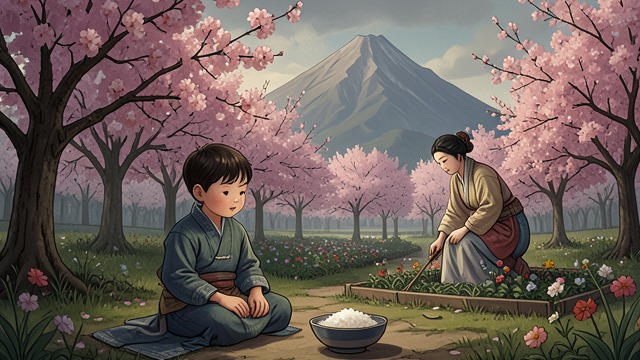
A Home Claimed
Daily belonging
The Narrator (God) builds a world around Nishio-san, the garden, and the mountain landscape. Japanese food, language, and custom make the child feel chosen and at home.
A country of the self
The child openly declares an intention to become Japanese. Belonging is understood as lived attachment rather than a matter of family origin.
Nishio-san Might Leave
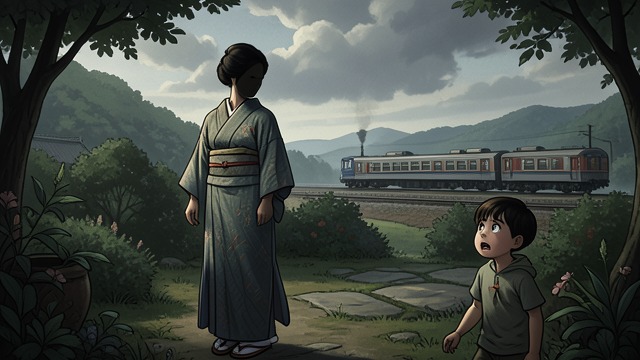
Nishio-san Might Leave
A first threat of separation
Nishio-san announces that she may leave because she is tired and must care for her daughters. The child hears the news as a personal catastrophe rather than an ordinary change in employment.
Loss expands in scope
Mother then explains that the entire family will eventually leave Japan. The two threats converge, making it seem that every part of the child’s world is temporary.
A Future Without a Date

A Future Without a Date
No destination known
Mother says the family will leave because Father is a diplomat, but cannot say where or when. The lack of a specific destination gives the child no practical way to prepare.
Reason cannot comfort
The Narrator (God) asks why Father must obey Belgium and protests that it cannot punish him from far away. Adult explanations only confirm that the child has no authority over the decision.
The Catastrophe Deferred
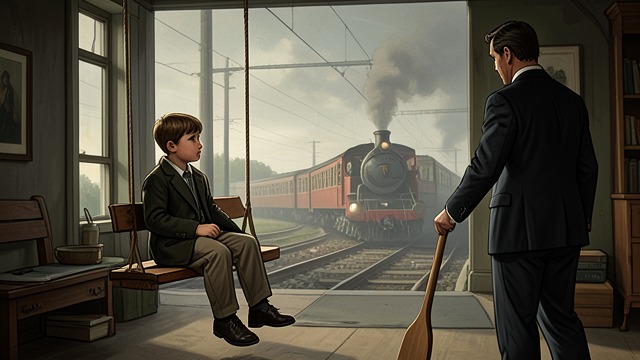
The Catastrophe Deferred
A promise of more time
Father says the family will remain in Japan for two or three more years. The child recognizes that this is a reprieve, not a cancellation of departure.
Attachment deepens
The certainty of future loss alters how the Narrator (God) loves the present. Rather than withdrawing, the child resolves to give Nishio-san more affection while there is time.
Memory as Resistance
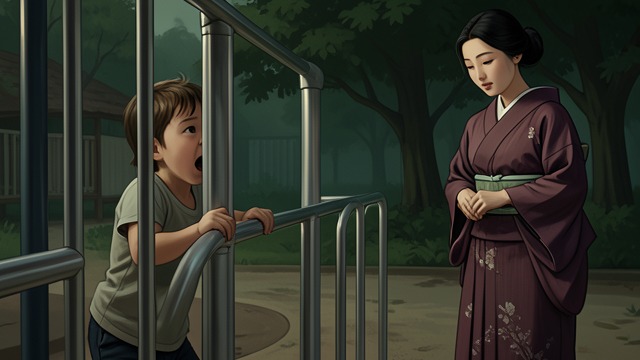
Memory as Resistance
A command to remember
At the playground, the child repeatedly says that it must remember. Memory becomes a deliberate answer to a future in which place, language, and people will be lost.
Loss written into identity
The Narrator (God) imagines preserving experience through the mind as if it were written text. The anticipated departure begins a lifelong practice of turning attachment into recollection.
Spring and summer 1970
At age three, after the household dispute
The conversation after Nishio-san's resignation announcement
Later that day
The day after the departure conversation
